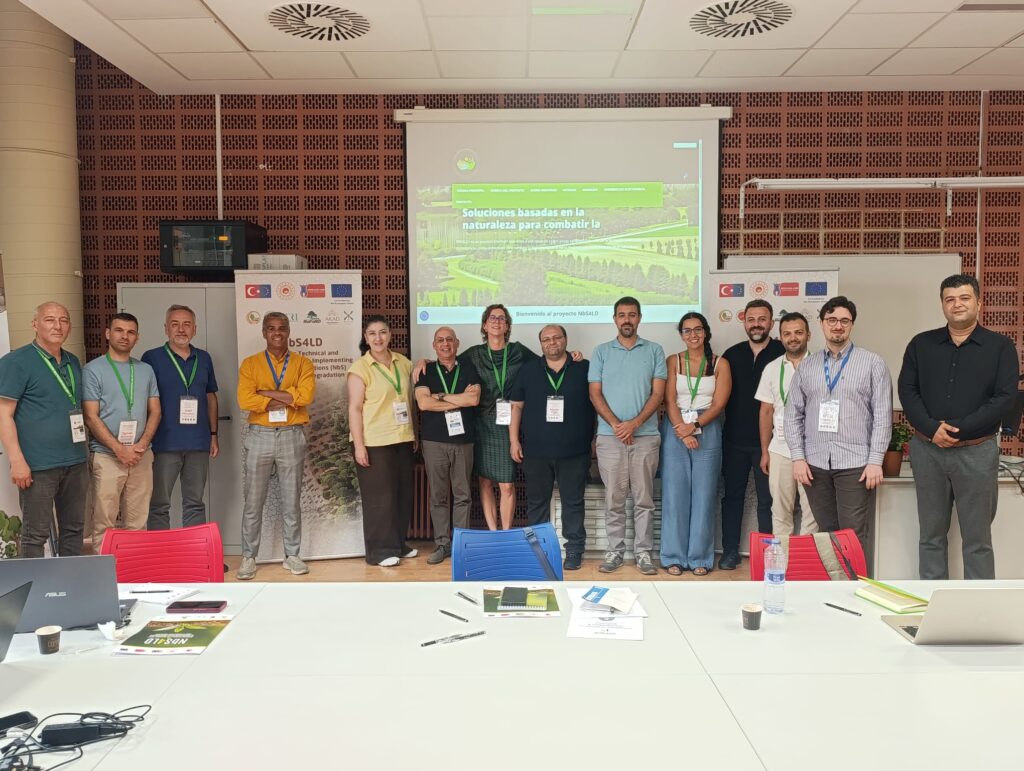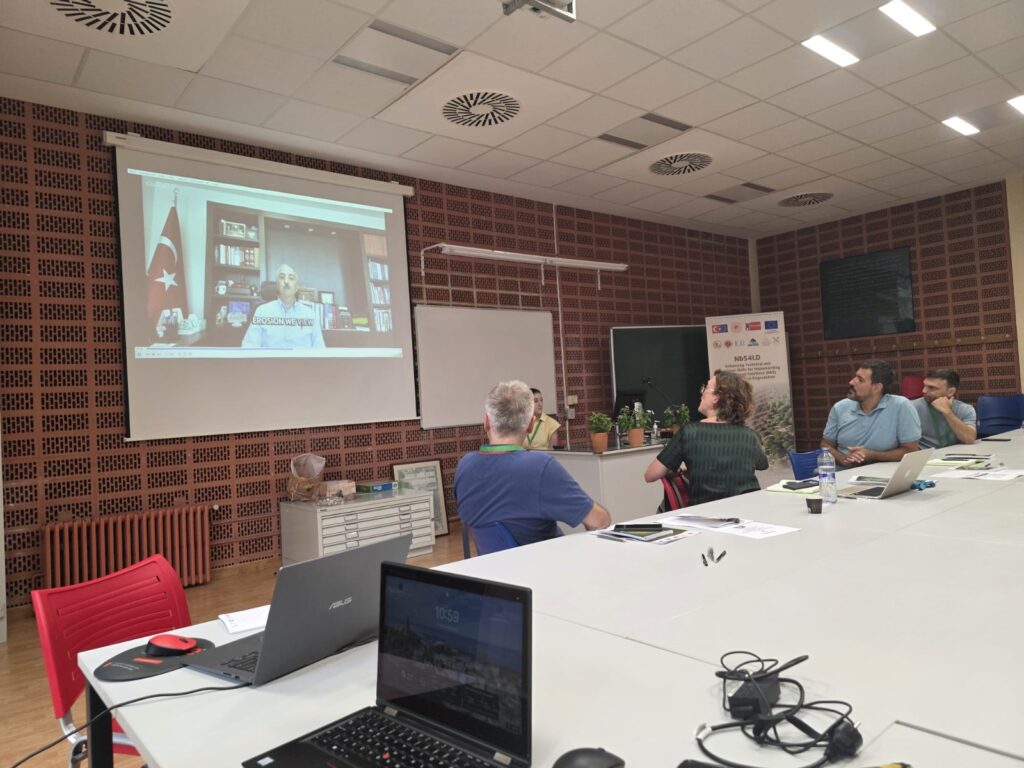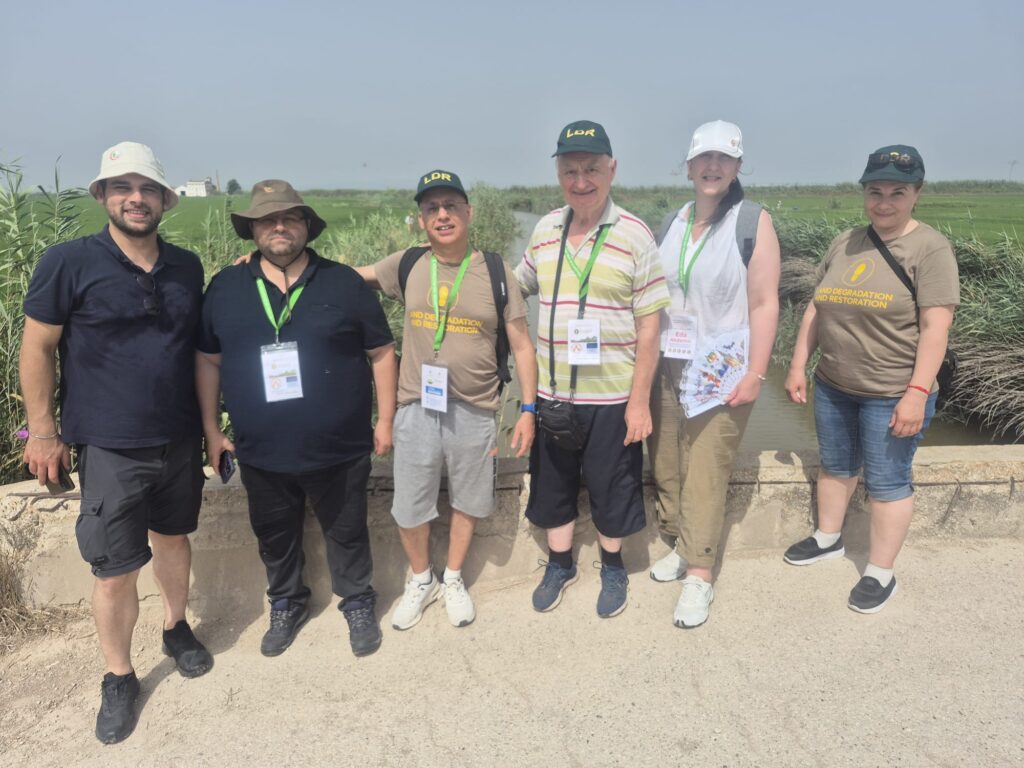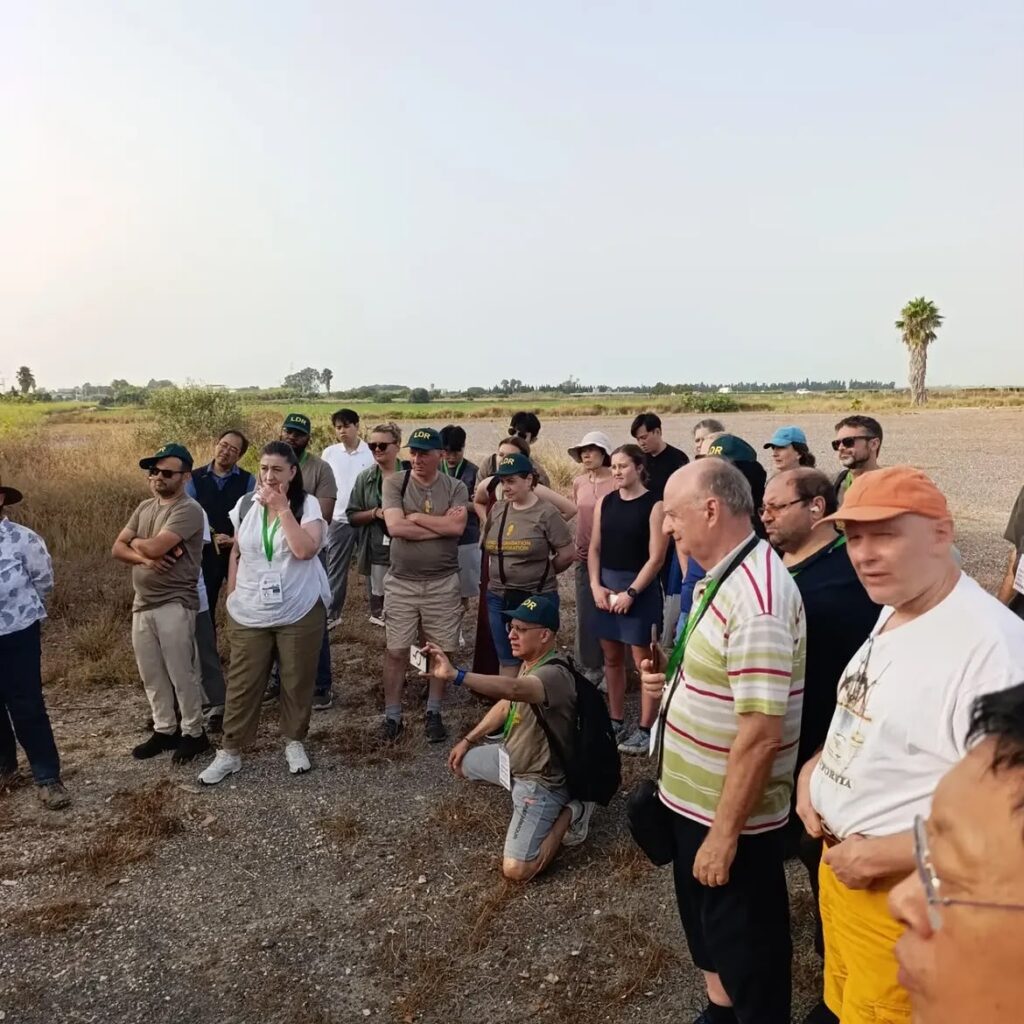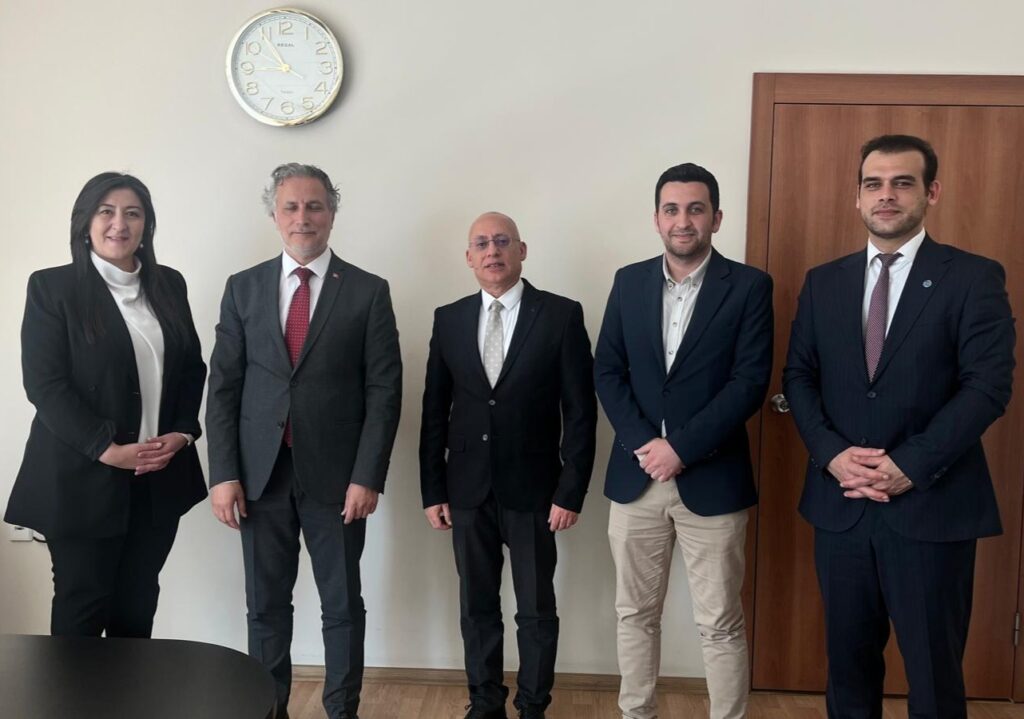
The second in-person coordination meeting of the Erasmus+ project “Enhancing Technical and Vocational Skills for Implementing Nature-Based Solutions (NbS) to Combat Land Degradation (NbS4LD)”, coordinated by the General Directorate of Combating Desertification and Erosion, was successfully held in Valencia, Spain, with the participation of all project partners.
During the meeting, the current status of the project and the activities carried out to date were reviewed. Discussions also focused on the upcoming project activities, the responsibilities of each project partner, and key aspects of the implementation process.
The meeting commenced with an opening address delivered via video conference by Prof. Dr. Kasım Yenigün, Director General of the General Directorate of Combating Desertification and Erosion. Following the opening remarks, Dr. Ahmet Şenyaz, Project Coordinator, presented an overview of the project’s current progress, completed activities, and the work planned for the upcoming implementation period.
Participants evaluated the progress made toward the project’s objectives and discussed the activities to be carried out in the next phases. The meeting also provided an opportunity to review the roles and responsibilities of each project partner and to exchange views on ensuring effective coordination throughout the implementation process.
The coordination meeting served as an important platform for strengthening cooperation among project partners, sharing knowledge and experience, evaluating ongoing activities, and refining the project’s roadmap for the coming period.
The project brings together six organizations from Türkiye, Italy, Spain, and North Macedonia with the shared objective of integrating Nature-Based Solutions (NbS) into vocational education and training systems to combat land degradation, enhance technical capacity, and promote green skills.
In addition to strengthening knowledge and practical capacity related to Nature-Based Solutions, the project aims to encourage the wider adoption of sustainable land management approaches. Bringing together expertise and practical experience from different countries will facilitate the exchange of best practices and support the development of innovative approaches for vocational education.
Throughout the project, the planned activities are expected to contribute to preventing land degradation, restoring degraded ecosystems, and promoting the wider implementation of Nature-Based Solutions for sustainable ecosystem management.
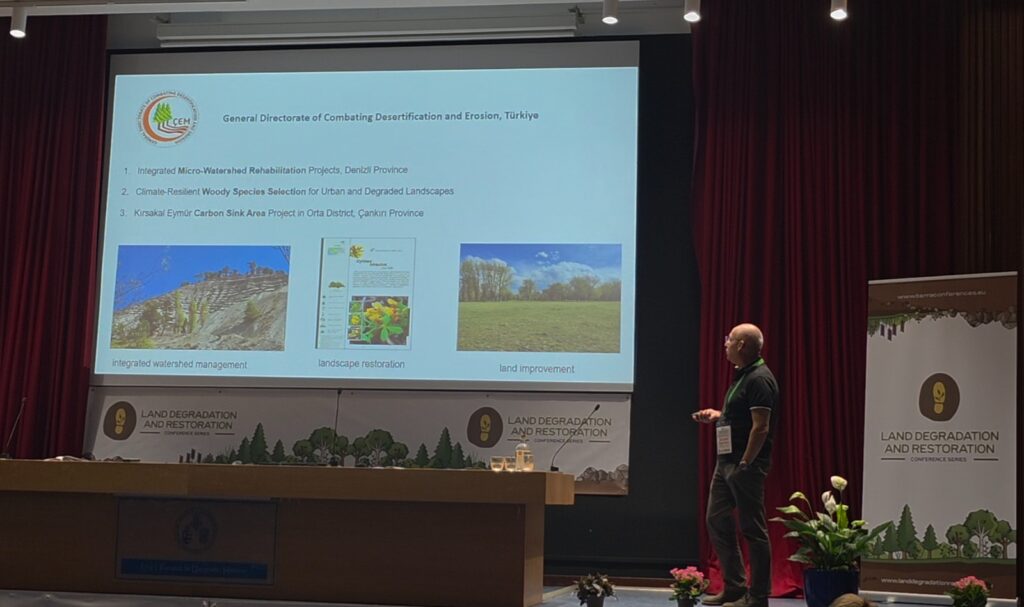
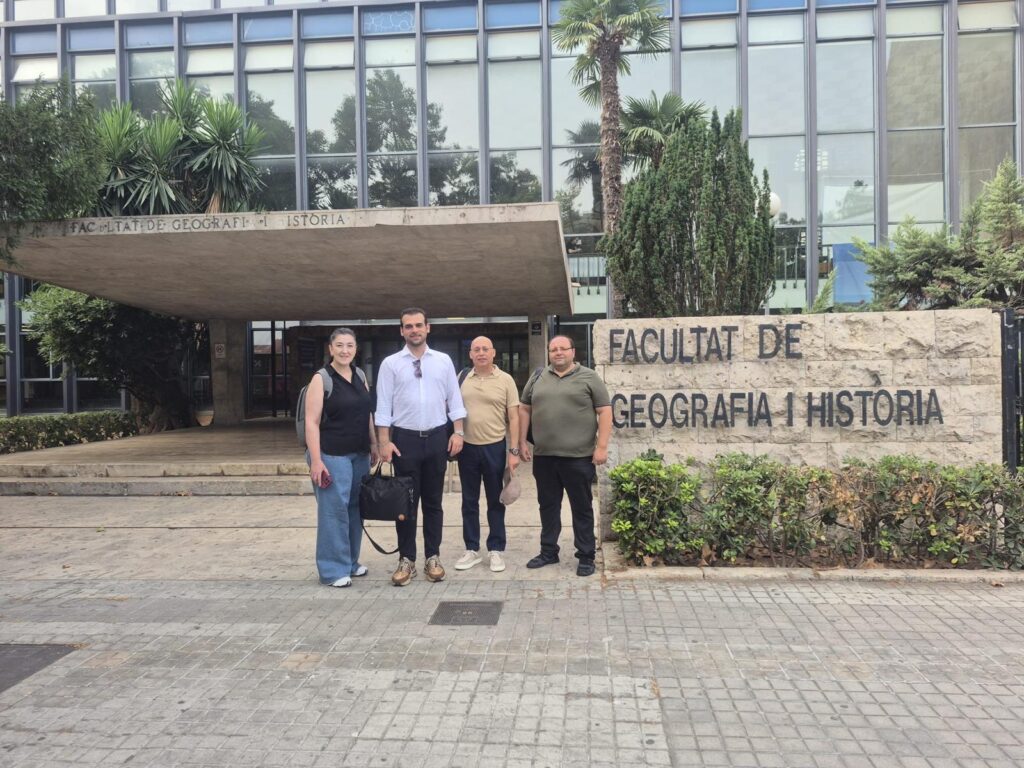
Alongside the coordination meeting, the project consortium participated in the 1st International Conference on Land Degradation and Restoration, held at the Faculty of Geography and History of the University of Valencia.
During the conference, the objectives, activities, and expected outcomes of the Erasmus+ project coordinated by the General Directorate of Combating Desertification and Erosion were introduced to an international audience. Project partners also presented a series of best practice examples demonstrating the application of Nature-Based Solutions.
These presentations highlighted the role of Nature-Based Solutions in combating land degradation, showcased their practical applications across different environmental contexts, and emphasized their contribution to sustainable land management. The conference also provided an excellent opportunity to disseminate the knowledge and experience generated within the project while fostering international exchange among researchers, practitioners, and stakeholders from different countries.
The successful organization of the second in-person coordination meeting in Valencia, together with the project’s participation in the international conference, marked another significant milestone in increasing the project’s visibility, strengthening cooperation among project partners, and promoting Nature-Based Solutions through vocational education and training.
Date: 28 July 2026
#NbS4LD #ErasmusPlus #NbS4LD #NatureBasedSolutions #GreenSkills #VET #LandDegradation #InteractiveWorkshops
On 1 June 2026, the NbS4LD+ Interactive Workshop Series concluded with its final online session, delivered by Mr. Dominique Reeb, an international expert from the Food and Agriculture Organization of the United Nations (FAO). The workshop brought together representatives from all project partners via Zoom.
The session focused on Participatory Approaches, highlighting the importance of stakeholder engagement in the planning, implementation, and long-term sustainability of Nature-based Solutions (NbS). Mr. Reeb introduced the concept of participation, explaining its different levels and demonstrating how participatory processes can be assessed and applied in environmental restoration and sustainable land management initiatives.
Participants explored practical methods for engaging local communities, public institutions, and other stakeholders throughout the project lifecycle. The workshop also emphasized that effective participation strengthens decision-making, promotes local ownership, and increases the long-term success of restoration and conservation initiatives.
As the final workshop of the NbS4LD+ training programme, the session successfully concluded the consortium’s interactive learning series by providing valuable insights into participatory methodologies that complement the project’s technical and educational components. The workshop marked an important milestone in strengthening the knowledge and capacities of project partners before the next phase of project implementation and international activities
Date: 1 June 2026
TAGS
#NbS4LD #ErasmusPlus #NbS4LD #NatureBasedSolutions #GreenSkills #VET #LandDegradation #InteractiveWorkshops
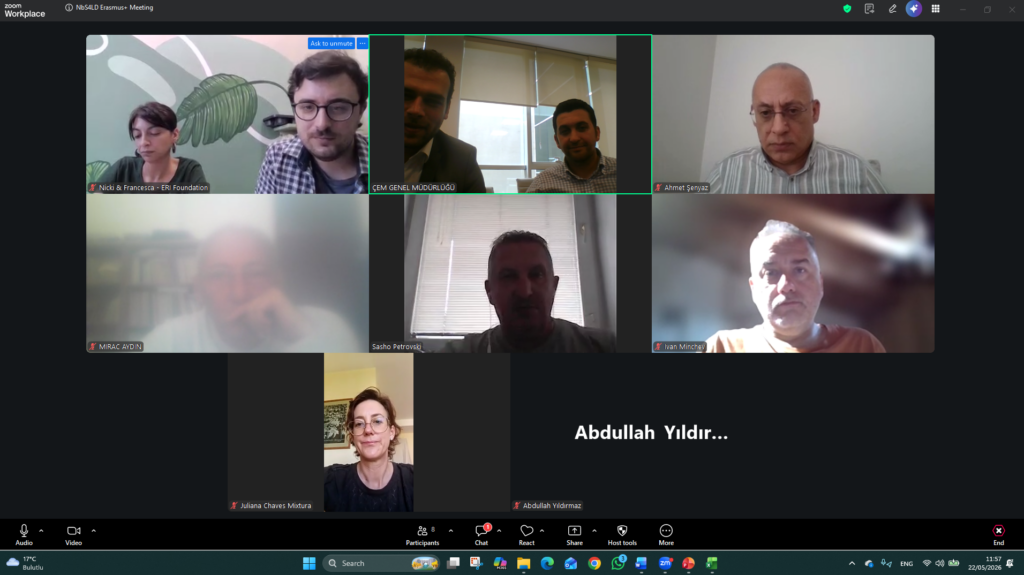
On 22 May 2026, the NbS4LD+ consortium held an online partner coordination meeting to discuss project implementation, financial reporting requirements, and preparations for the upcoming 1st International Conference on Land Degradation and Restoration in Valencia, Spain.
During the meeting, Mr. Ceyhun Çimen from the General Directorate of Combating Desertification and Erosion (GDCDE) delivered a presentation on the project’s financial management procedures and reporting requirements. He introduced a standardized Excel-based financial recording template and provided guidance on documenting project expenditures, reporting completed activities, and ensuring compliance with Erasmus+ financial regulations.
The consortium also reviewed recent communications with the Turkish National Agency, which had approved the partners’ participation in the Valencia conference. Discussions focused on the conditions for participation, budget considerations, dissemination opportunities, and the strategic importance of the conference for promoting project results and strengthening international cooperation. Partners exchanged views on conference logistics, registration arrangements, accommodation options, and the organization of project meetings alongside the event.
In addition, participants discussed the preparation of conference abstracts based on project case studies, progress reporting obligations, and the next steps for training materials and workshop activities. The meeting provided an opportunity to align financial and technical planning across the consortium and to ensure that all project activities continue to be implemented effectively and in accordance with Erasmus+ requirements.
The meeting concluded with agreement on the upcoming reporting deadlines, conference preparations, and continued collaboration among partners to maximize the impact and visibility of the NbS4LD+ Project.
Date: 22 May 2026
TAGS
#NbS4LD #ErasmusPlus #NbS4LD #NatureBasedSolutions #GreenSkills #VET #LandDegradation
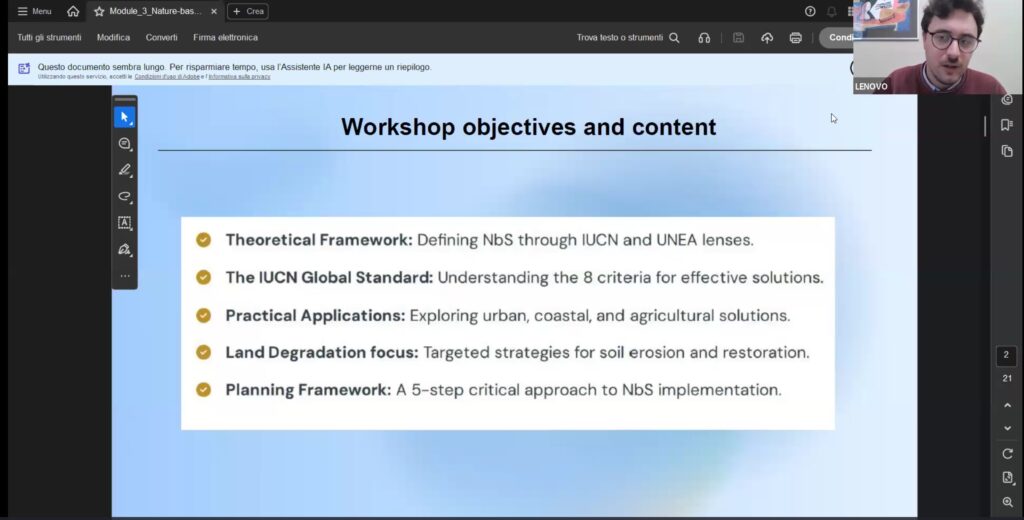
On 18 May 2026, the NbS4LD+ consortium continued its Interactive Workshop Series with Module 3: Nature-based Solutions for Addressing Land Degradation, delivered online by Fondazione European Research Institute ETS (ERI). The session was presented by Mr. Nicki Anastasio and attended by representatives from all project partner organizations via Zoom.
The workshop provided a comprehensive overview of the principles and practical application of Nature-based Solutions (NbS) in addressing land degradation. Mr. Anastasio introduced the IUCN NbS criteria and evaluation standards, explaining how they support the planning, implementation, monitoring, and assessment of NbS interventions. He also discussed the major challenges associated with implementing Nature-based Solutions, including governance, stakeholder engagement, financing, and long-term sustainability.
A significant part of the session focused on European Union policies and ongoing discussions related to Nature-based Solutions, highlighting current initiatives and the increasing role of NbS in environmental restoration and climate resilience. Participants were also introduced to evaluation frameworks used to assess the effectiveness of NbS projects and to a case study analysis framework, which will support partners in selecting, evaluating, and documenting project case studies.
The workshop concluded with an interactive discussion, during which partners exchanged experiences and explored how the presented evaluation methods and best practices could be incorporated into the NbS4LD+ training programme and future project activities.
Date: 18 May, 2026
TAGS
#NbS4LD #ErasmusPlus #NbS4LD #NatureBasedSolutions #GreenSkills #VET #LandDegradation #InteractiveWorkshops
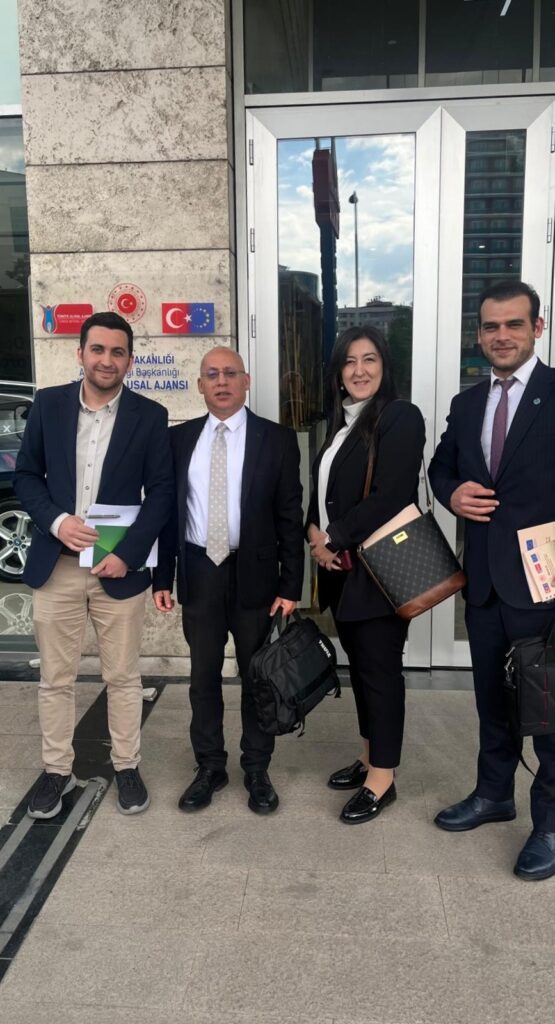
On 15 May 2026, representatives of the NbS4LD+ Project Coordination Team from the General Directorate of Combating Desertification and Erosion (GDCDE) held a face-to-face coordination meeting with the Turkish National Agency (TNA) in Ankara.
The meeting was attended by Ms. Aslıhan Aşkın Aktaş, Assistant Expert, and Mr. Hür Güldü, Head of the Partnerships Department, representing the Turkish National Agency. The project coordinator was represented by Dr. Ahmet Şenyaz, Eda Akdemir, Hakan Metehan Yarma, and Ceyhun Çimen.
The meeting focused on the financial and administrative implementation of the NbS4LD+ Erasmus+ Project. Discussions covered project budgeting, financial management, reporting requirements, and the proper documentation of in-kind contributions and project expenditures in accordance with Erasmus+ regulations. The Turkish National Agency also provided recommendations on improving project quality, maximizing project impact, and ensuring the successful achievement of project objectives throughout the implementation period.
In addition, participants discussed the strategic importance of participating in the 1st International Conference on Land Degradation and Restoration, to be held in Valencia, Spain, emphasizing its role in strengthening international cooperation, disseminating project results, expanding professional networks, and supporting the successful implementation of the project’s educational and scientific activities.
The meeting concluded with a productive exchange of views and practical recommendations, reinforcing the consortium’s commitment to high-quality project management, effective financial implementation, and the long-term sustainability of the NbS4LD+ project.
Date: 15 May 2026
TAGS
#NbS4LD #ErasmusPlus #NbS4LD #NatureBasedSolutions #GreenSkills #VET #LandDegradation #TNA #TurkishNationalAgency
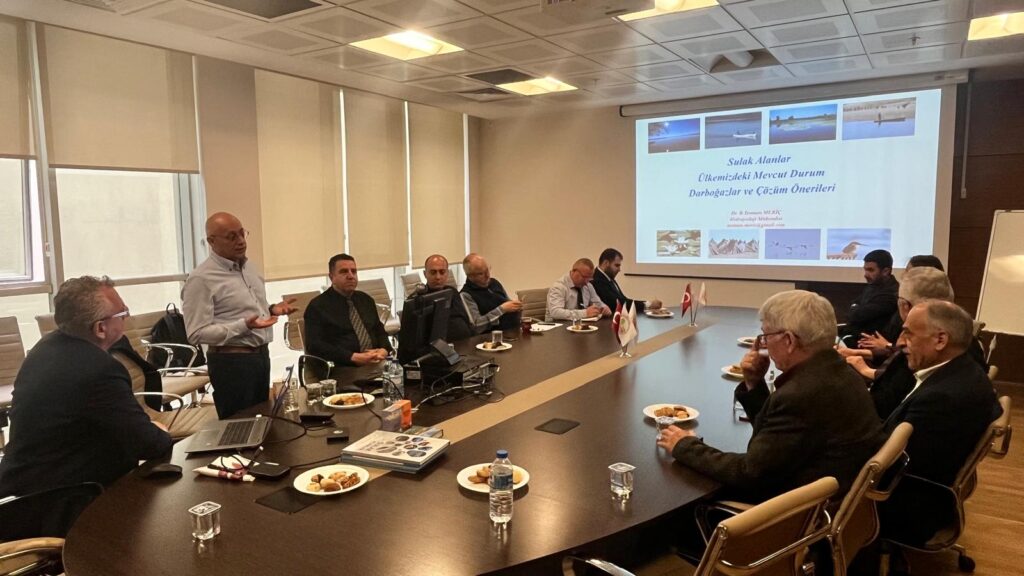
On 12 May 2026, the General Directorate of Combating Desertification and Erosion (GDCDE) organized a training seminar entitled “Wetlands in Türkiye: Current Status, Challenges and Solution Proposals” as part of the NbS4LD+ Erasmus+ Project.
The session was delivered by Dr. B. Teoman Meriç, who provided a comprehensive overview of the current condition of wetlands in Türkiye, highlighting the ecological importance of these ecosystems, the major threats affecting their sustainability, and practical approaches for their conservation and restoration. The presentation also addressed policy frameworks, management challenges, and the role of Nature-based Solutions (NbS) in protecting wetland ecosystems and strengthening climate resilience.
In addition to members of the NbS4LD+ project team, the seminar was attended by approximately 20 participants from different departments of the General Directorate, creating an opportunity for interdisciplinary knowledge exchange and institutional cooperation.
The event contributed to raising awareness of wetland conservation and promoted the integration of Nature-based Solutions into sustainable land management practices, while strengthening the project’s capacity-building and knowledge-sharing objectives.
Date: 12 May 2026
TAGS
#NbS4LD #ErasmusPlus #NbS4LD #NatureBasedSolutions #GreenSkills #VET #LandDegradation #Wetlands
On 11 May 2026, the NbS4LD+ Interactive Workshop Series continued with an online training session hosted by Kastamonu University, bringing together representatives from all project partners via Zoom.
The workshop focused on strengthening the pedagogical competencies of future trainers through three complementary sessions. Assoc. Prof. İlkay Aşkın Tekkol delivered a presentation on Foundations of Education and Adult Learning, introducing the fundamental principles of adult education, learner-centered approaches, and effective learning environments for diverse target groups.
The second session was presented by Assoc. Prof. Mustafa Öztürk Akcaoğlu, who explored Instructional Design, Teaching Strategies, Methods, and Techniques. His presentation emphasized the systematic planning of educational programmes, the selection of appropriate instructional methods, and the design of engaging learning experiences tailored to the project’s target audiences.
The workshop concluded with a session on Digital Learning Strategies and Artificial Intelligence, delivered by Lecturer Ahmet Tabanlıoğlu. Participants were introduced to innovative digital learning approaches, the integration of artificial intelligence into educational practices, and practical tools that can enhance the effectiveness and accessibility of online training within the NbS4LD+ project.
The interactive discussions enabled partners to exchange experiences on educational methodologies and digital teaching practices, further supporting the development of high-quality training materials and the successful implementation of the project’s capacity-building activities.
Date: 11 May, 2026
TAGS
#NbS4LD #ErasmusPlus #NbS4LD #NatureBasedSolutions #GreenSkills #VET #LandDegradation #InteractiveWorkshops
On 4 May 2026, the NbS4LD+ consortium continued its Interactive Workshop series with an online session on Soft Skills for Effective Teaching, hosted by Mixtura Ambiental (Spain). The workshop was delivered by Ms. Juliana Chaves-Chararro and Mr. Jonathan Zanon Linhares, with representatives from all project partners participating via Zoom.
The workshop focused on the essential soft skills required for trainers to effectively deliver educational programmes within the NbS4LD+ project. The presenters emphasized the importance of communication, active listening, facilitation techniques, learner engagement, teamwork, adaptability, and effective presentation skills in creating an interactive and inclusive learning environment.
Participants explored learner-centred teaching approaches and discussed practical strategies for improving interaction with diverse target groups, including students, professionals, and local communities. The session also highlighted methods for encouraging participation, managing group dynamics, and enhancing the overall learning experience in both face-to-face and online training environments.
The workshop concluded with an interactive discussion where partners shared their own teaching experiences and exchanged best practices for strengthening training delivery. The session contributed to improving the pedagogical competencies of the consortium and supported the preparation of high-quality training activities within the NbS4LD+ project.
Date: 04 May, 2026
TAGS
#NbS4LD #ErasmusPlus #NbS4LD #NatureBasedSolutions #GreenSkills #VET #LandDegradation #Interactive Workshops
On 27 April 2026, the NbS4LD+ consortium continued its Interactive Workshop series with a session hosted by the Regional Forestry and Rural Development Centre (REFORD), North Macedonia. The workshop focused on Sustainable Forest Management (SFM) for Addressing Land Degradation and was attended by representatives from all partner institutions.
The training was delivered by Mr. Ivan Minchev and Mr. Sasho Petrovski, who shared their expertise on sustainable forest management principles and innovative forest planning approaches. Mr. Sasho Petrovski introduced the fundamental concepts of sustainability in forest management, highlighting key international frameworks including Agenda 21, the UN Sustainable Development Goals (SDG 15), Forest Europe, the EU Forest Strategy 2030, and voluntary forest certification systems such as FSC and PEFC. He also presented the Pan-European Criteria and Indicators for Sustainable Forest Management and demonstrated practical approaches to minimizing runoff, soil erosion, and sediment production through sustainable forestry practices.
In the second part of the workshop, Mr. Ivan Minchev presented the application of Geographic Information Systems (GIS) in forest planning and water regulation. His presentation focused on monitoring forest cover loss, integrating decision-tree models within GIS, and applying innovative spatial analysis techniques to estimate runoff patterns and support sustainable land and water management.
The workshop concluded with an interactive discussion in which partners exchanged experiences from their respective countries and explored how sustainable forest management practices can contribute to combating land degradation and strengthening ecosystem resilience. The session further enhanced the consortium’s shared knowledge and supported the development of high-quality training materials for the NbS4LD+ project.
Date: 27 April 2026
TAGS
#NbS4LD #ErasmusPlus #NbS4LD #NatureBasedSolutions #GreenSkills #VET #LandDegradation #InteractiveWorkshops
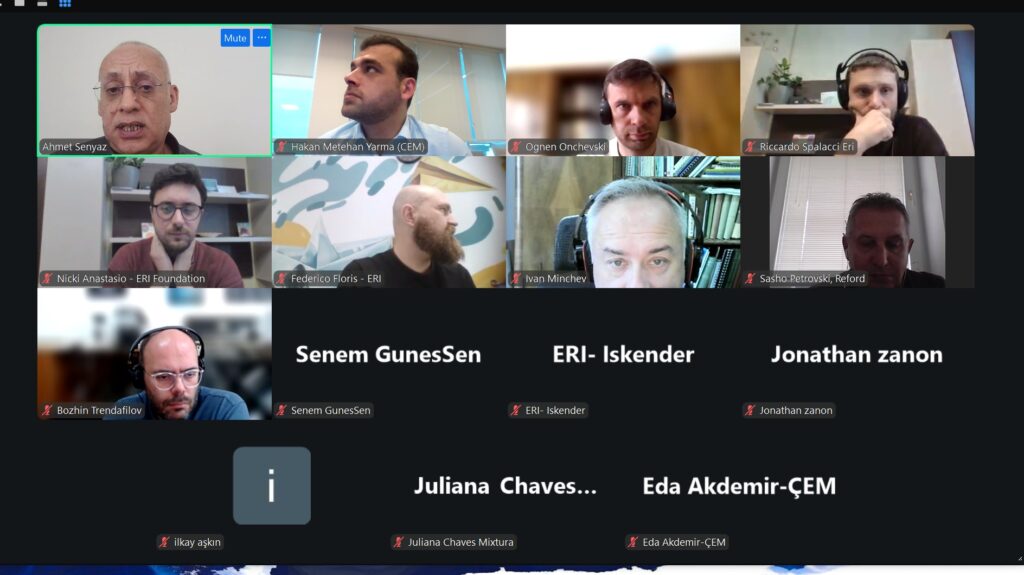
On 20 April 2026, the NbS4LD+ consortium successfully held its first Interactive Workshop online, bringing together trainers and representatives from all partner institutions. Organized by the General Directorate of Combating Desertification and Erosion (GDCDE), the workshop marked the beginning of the project’s international training programme and focused on Land Degradation.
The workshop opened with an introduction to the training programme and welcomed both project partners and prospective trainers. Throughout the session, experts from the consortium delivered presentations covering the scientific foundations, monitoring methods, and sustainable management of land degradation.
Prof. Miraç Aydın (Kastamonu University) introduced the fundamental concepts of land degradation, explaining the relationships between land, soil, ecosystems, and ecosystem services while providing an overview of different forms of degradation.
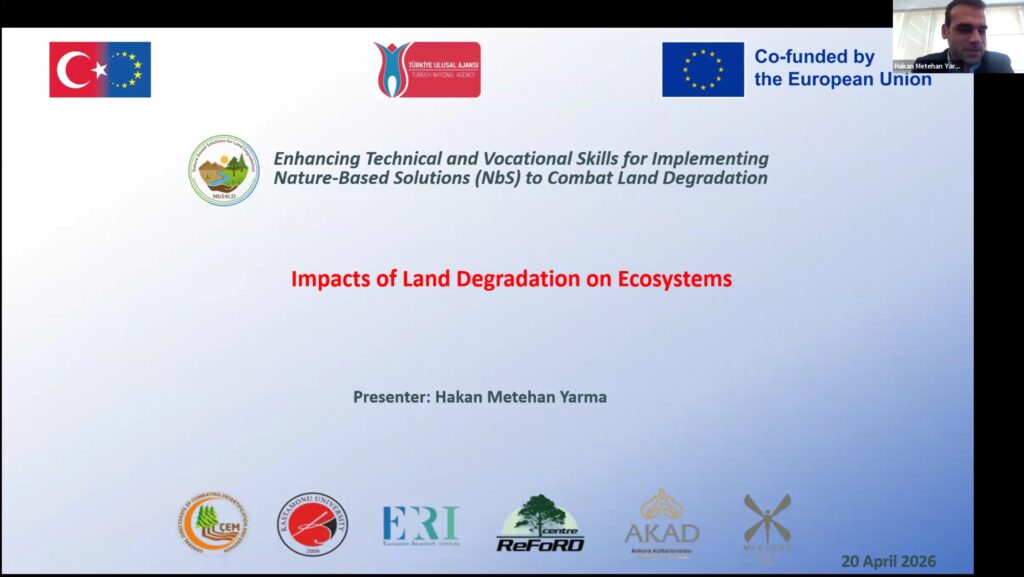
The session on the drivers of land degradation was presented by Eda Akdemir, who examined the major factors contributing to land degradation, including unsustainable agricultural practices, overgrazing, deforestation, mining activities, urbanization, and climate change. This presentation was followed by Hakan Metehan Yarma (General Directorate of Combating Desertification and Erosion), who discussed the environmental and socio-economic impacts of land degradation, highlighting its effects on ecosystem services, biodiversity, soil productivity, water resources, food security, and human well-being.
Assoc. Prof. Emre Aktürk presented modern approaches for the measurement and monitoring of land degradation, demonstrating the use of remote sensing technologies, Geographic Information Systems (GIS), vegetation indices such as NDVI and EVI, and field-based monitoring techniques for assessing land conditions.
The workshop concluded with a presentation by Dr. Ahmet Şenyaz, who introduced the principles of Sustainable Land Management (SLM) and Land Degradation Neutrality (LDN). His presentation also covered the objectives of the United Nations Convention to Combat Desertification (UNCCD), the Sustainable Development Goals (SDGs), and practical challenges related to policy implementation, institutional capacity, and stakeholder engagement.
The interactive discussions enabled partners to exchange experiences from their respective countries, evaluate methodological approaches, and coordinate preparations for the upcoming workshop series. The meeting concluded with the agreement to continue refining the training materials and to proceed with the next sessions according to the project training schedule.
Date: 20 April, 2026
TAGS
#NbS4LD #ErasmusPlus #NbS4LD #NatureBasedSolutions #GreenSkills #VET #LandDegradation #InteractiveWorkshops